
Our Projects & Initiatives

OUR Projects and Initiatives

GPQT leads transformative projects and initiatives across the healthcare sector, driving quality improvement and innovation throughout the MENA region

POCQI Implementation

Point of Care Quality Improvement initiatives enhancing patient outcomes at the bedside

Professional Certification Courses

Comprehensive training programs for healthcare professionals with recognized credentials

ISDIC and Learning Collaboratives

International Society for Disability and Inclusion in Care collaborative networks

Baby Friendly Hospitals Initiative

Promoting breastfeeding and improving maternal and infant health outcomes
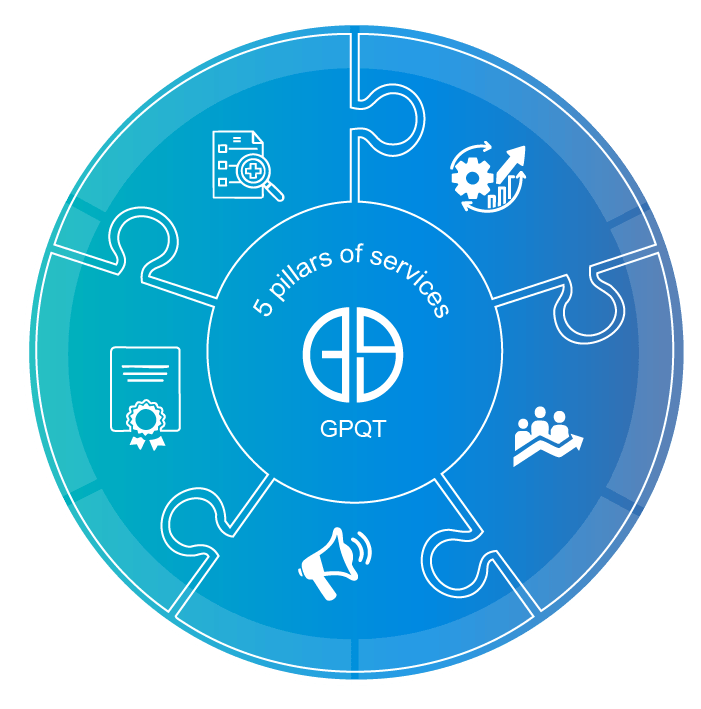
Key Programs Under our 5 pillars

  • National Healthcare Scheme Assessment
    Assessment of national healthcare schemes and setting roadmaps for establishment and improvement.
  • Disease Prevention Policy Review
    Mapping and reviewing existing disease prevention policies, strategies, legislation, guidelines, and SOPs for epidemics and communicable diseases.
  • Hospital Capacity Enhancement
    Hospital needs analysis, waste improvement and development for increased capacity and efficiency.
  • Women’s Leadership in Healthcare
    Situational analysis on challenges to women’s leadership in healthcare and campaign support for gender equity.
  • Primary Healthcare Development
    Initial assessment of primary healthcare centers and roadmap development for national preparation and accreditation programs.

HCAC actively promotes advocacy and public awareness by engaging communities through inclusive, person-centered initiatives that amplify the voice of individuals and foster a shared commitment to quality, safety, and equitable care.

Key Programs

  • COVID-19 National Response Support
    Supporting the national response to COVID-19 across public, private, military, and university-affiliated hospitals in Jordan.
  • The Change Day Campaign
    Promoting patient safety and quality improvement initiatives across Jordan; this year marks the 12th edition of the campaign.
  • Public Awareness Campaigns
    Engaging communities and healthcare professionals through campaigns, webinars, and panel discussions to raise awareness about quality and safety in healthcare.
  • HCAC Quality International Conference
    Biennial international conference bringing together healthcare quality experts, practitioners, and stakeholders from across the region.
  • Accreditation Surveys
    Comprehensive surveys for 41 hospitals, 108 PHCs, 37 breast units, 10 ambulatory care facilities, and more.
  • Al-Bashir Hospitals Program
    Preparation and accreditation of Al-Bashir Hospitals to enhance quality and safety standards.
  • Central Blood Bank Certification
    Preparation and accreditation of the Central Blood Bank to ensure safe blood supply.
  • Baby-Friendly Hospitals Initiative
    Preparation and certification program for Baby-Friendly Hospitals to promote breastfeeding.
  • Shelter Quality Standards
    Standards for quality and external evaluation in shelters to ensure safe environments.
  • Intellectual Disability Guidelines
    Development of clinical guidelines and pathways for intellectual disability and autism.
  • Autism Inclusion Standards
    Design and development of standards for autism inclusion in education.
  • Disability Standards
    Diagnostic standards for persons with disabilities and community rehabilitation standards.

Training, certification, clinical improvement, lean, consultation, continuous QI:

  • Enhancing the Quality of Early Childhood Development Services
  • QI system to protect Rights of Persons with Disabilities (PwD)
  • QMS for Nurseries – Early Childhood Services
  • Lean system for emergency department improvement
  • POCQI (Point of Contact Quality Improvement) – WHO RMNCH approach
  • Hospital Preparedness and Response to Emergencies Training
  • Infection Preventionist Course
  • Nursing Executive for Quality Course
  • Occupational Health Course
  • Emergency Unit Management Training
  • Clinical Risk Manager Course
  • Quality and Patient Safety Workshop
  • Quality Practitioner Course
  • QSR (Quality, Safety, and Risk) Management for emergency preparedness
  • Training on Quality Management and Performance Improvement
  • Executive Leadership in Quality Course
  • WASH in Healthcare Facilities
    Research on water, sanitation, and hygiene practices in healthcare facilities to improve infection prevention and control.
  • MIYCN Model Network
    Maternal, Infant, and Young Child Nutrition model network development and evaluation to improve maternal and child health outcomes.
  • Patient Experience Program
    Comprehensive assessment of patient experiences to drive patient-centered care improvements across healthcare facilities.
  • Quality Interventions Assessment
    Evaluation of quality improvement interventions to identify effective strategies and best practices for healthcare organizations.
  • Digital Health Innovations
    Research and development of digital health solutions to enhance healthcare quality, accessibility, and efficiency.